Introduction
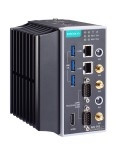
The AIG-502 is a robust Industrial IoT (IIoT) gateway
designed to provide secure and reliable data communication for industrial
applications. Compliance with the IEC 62443-4-2 Security Level 2 requirements
ensures secure network connectivity, data transmission, and device
authentication. The AIG-502 is equipped to acquire field data via Modbus RTU,
ASCII, and TCP protocols, enabling seamless integration with the Azure cloud
platform. With ample computing power, it supports advanced edge computing
capabilities using Azure IoT Edge modules, making it an ideal solution for
industries seeking to enhance data-driven operations securely and efficiently.
Boost Edge Computing Capabilities With Azure IoT Edge
AIG-502 supports Azure IoT Edge to bring in a multitude of
benefits including edge computing capabilities, reduced bandwidth costs,
flexibility and scalability, seamless integration with Azure services, and ease
of management and update. Specifically, with the AIG-502 processing data
locally, it not only offers rapid responses and low latency but also
effectively reduces network bandwidth usage, thereby cutting costs.
Additionally, the modular design of the AIG-502 and Azure IoT Edge support make
your system both flexible and easily expandable. At the same time, AIG-502’s
seamless integration with Azure cloud services allows you to effortlessly
extend cloud capabilities to edge devices.
Reliable Software Updates With Easy Installation and
Recovery
The software update function ensures easy, reliable, and
secure system upgrades. Through the web console, users can install Debian, and
specific patches using Debian APT, or apply a comprehensive update pack
provided by Moxa. Updates can be retrieved online or manually uploaded with
options for immediate or scheduled installation. The function also supports
download resumption and automatic recovery, providing a seamless and resilient
update experience to keep systems running smoothly.
Security Dashboard Optimized for Detecting Security
Issues
A security dashboard utilizes device scans to identify
potential cybersecurity threats from multiple angles, such as during account
settings management, application networking, application resource usage
monitoring, product certificates deployment, service settings modifications,
and system status checks. Upon detecting threats, a mitigation plan is
recommended to resolve issues.